



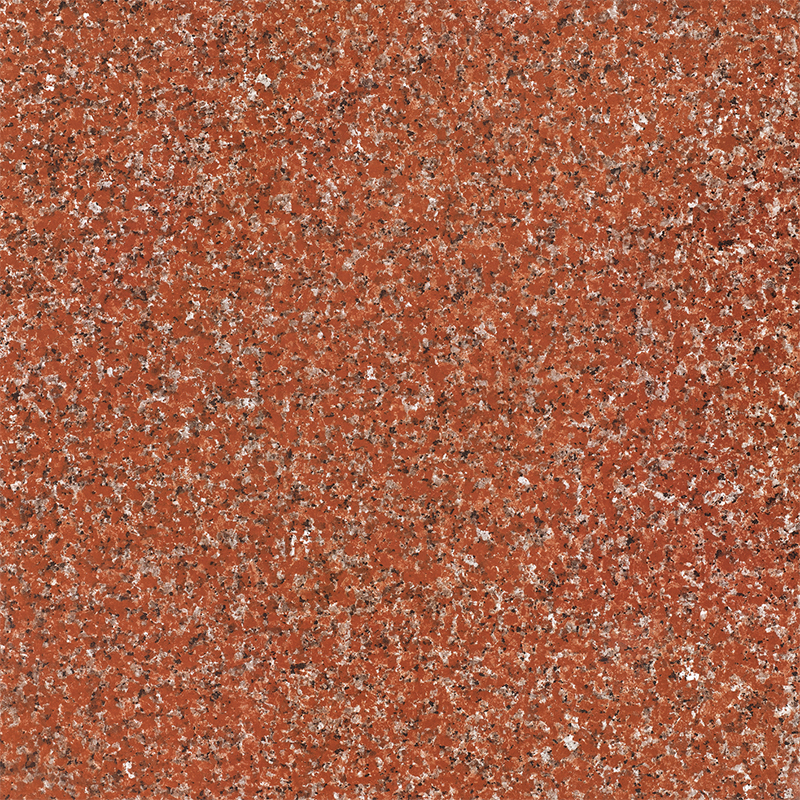


How can the colorfastness of solid color bricks be improved by controlling the pigment formula and firing temperature to prevent fading over long-term use?
Release Time : 2026-01-19
Colorfastness is a core indicator for measuring the color stability of solid color bricks over long-term use, and its performance directly depends on the synergistic effect of pigment formulation design and firing temperature control. As a color carrier, the chemical composition and crystal structure of the pigment determine the stability of the chromophore, while the firing temperature further strengthens or weakens colorfastness by affecting the compatibility and crystallization state of the pigment and matrix. For example, high-temperature pigments (such as chromium tin red and zirconium yellow) form stable solid solutions under high-temperature firing due to their dense crystal structure, effectively resisting external environmental corrosion; while low-temperature pigments (such as manganese red and cobalt blue), although rich in color, require formulation optimization and precise temperature control to avoid fading problems caused by lattice relaxation during long-term use.
The design of pigment formulations must balance chromophore power and chemical stability. Traditional pigments mostly use metal oxides or complex salts as the main color-producing components; for example, chromium oxide (Cr₂O₃) can exhibit stable green or blue at high temperatures, while cobalt oxide (CoO) can produce a deep blue. However, single metal oxides often suffer from limited color gamut or insufficient stability. Therefore, modern formulations frequently modify them by introducing rare earth elements or transition metal ions. For example, zirconium-based pigments (such as zirconium yellow and zirconium blue) combine zirconium ions (Zr⁴⁺) with silicate ions (SiO₄⁴⁻) to form a stable crystal structure, significantly improving the pigment's high-temperature resistance and chemical corrosion resistance. Meanwhile, chromium-tin red pigments achieve long-lasting and vibrant colors by forming spinel-type crystals at high temperatures through the synergistic effect of chromium ions (Cr³⁺) and tin ions (Sn⁴⁺).
Controlling the firing temperature is crucial for ensuring color fastness. Too low a temperature leads to incomplete pigment crystallization and increased lattice defects, thus reducing pigment stability; too high a temperature may cause pigment decomposition or reaction with the matrix, resulting in color changes. For example, zircon yellow pigment requires firing above 1250℃ to form a stable zircon structure. If the temperature is insufficient, the pigment is prone to fading due to lattice relaxation. Similarly, chrome green pigment, when fired above 1300℃, may have chromium ions reduced from Cr³⁺ to Cr²⁺ if the oxidizing atmosphere is insufficient, causing the color to change from green to brown. Therefore, the firing temperature needs to be precisely set according to the pigment type and matrix composition, and optimized through processes such as segmented heating and heat preservation to ensure sufficient pigment crystallization and prevent side reactions.
The compatibility between the pigment and the matrix also affects color fastness. If the difference in thermal expansion coefficients between the pigment and the matrix is too large, microcracks are easily generated during firing, providing channels for the penetration of external moisture, gases, or chemicals, accelerating pigment deterioration. For example, in ceramic tile production, adjusting the ratio of alumina (Al₂O₃) to silica (SiO₂) in the matrix can reduce the difference in thermal expansion between the matrix and zircon yellow pigment, reducing microcrack formation and thus improving color fastness. In addition, adding appropriate amounts of flux (such as borax or red lead) can lower the firing temperature and promote the fusion of pigments and the matrix. However, the amount of flux must be strictly controlled to avoid over-melting, which could lead to pigment diffusion or color fading.
Environmental adaptability is an important dimension in color fastness assessment. Solid color bricks are often used outdoors or in high-humidity environments and need to resist external factors such as ultraviolet radiation, acid rain, and temperature differences. For example, cobalt blue pigments are prone to photochromism under ultraviolet radiation, requiring coating with alumina or zirconium oxide to form a protective layer to block ultraviolet rays. Manganese red pigments are easily soluble in acidic environments, requiring an increase in the zinc oxide (ZnO) content in the formulation to enhance the pigment's acid resistance. Furthermore, optimizing the firing process to form a dense glassy phase between the pigment and the matrix can effectively block the penetration of moisture and gases, improving color fastness.
Maintaining color fastness during long-term use requires continuous optimization of the formulation and process. With the development of materials science, new types of pigments (such as rare-earth luminescent pigments and nano-pigments) are constantly emerging. Through quantum effects or surface modification techniques, they significantly improve color development efficiency and stability. For example, nano-titanium oxide (TiO₂) pigments can achieve precise color control by adjusting particle size, while their reduced surface activity significantly enhances their resistance to fading. Furthermore, the widespread adoption of low-temperature rapid firing technology allows pigments to crystallize at lower temperatures, reducing potential damage from high temperatures and providing a new path for improving colorfastness.
Ensuring the colorfastness of solid color bricks is a complex systems engineering project involving pigment chemistry, crystallography, thermodynamics, and environmental science. By precisely designing pigment formulations, strictly controlling firing temperatures, optimizing matrix compatibility, enhancing environmental adaptability, and continuously introducing new materials and technologies, solid color bricks can maintain vibrant colors over long-term use, meeting the dual aesthetic and functional requirements of architectural decoration, industrial design, and other fields.