



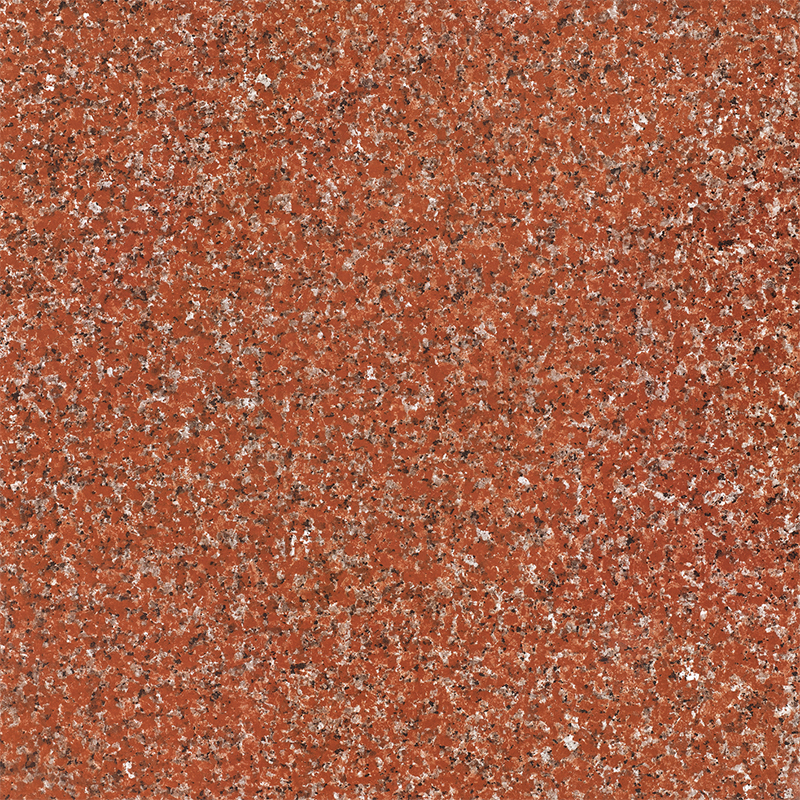


How can color matching of solid color bricks avoid color differences that affect aesthetics?
Release Time : 2026-02-12
Color matching in solid color brick production is a meticulous process. Its core lies in the synergy of raw material control, process optimization, and testing calibration to ensure a high degree of color consistency across each batch of bricks, preventing color variations from affecting the overall aesthetics. This process spans the entire chain from raw material selection and formula design to production and finished product inspection, requiring strict control over variables at each stage.
The purity and stability of raw materials are fundamental to color matching. The color of solid color bricks is primarily determined by the colorants in the glaze or body, and the impurity content of the raw materials directly affects the final color effect. For example, iron in the glaze may cause a yellowish-brown hue, while titanium may result in a grayish color. Therefore, high-purity, low-impurity coloring raw materials must be selected, and spectral analysis must be performed before warehousing to ensure that their chemical composition meets standards. Furthermore, slight differences may exist between different batches of raw materials. A pre-mixing process is necessary to uniformly blend multiple batches of raw materials, reducing the risk of color differences caused by raw material fluctuations.
The precision of the formula design is crucial to avoiding color variations. The type and proportion of colorants, as well as the amount of auxiliary raw materials (such as fluxes and suspending agents), must be determined through multiple experiments to achieve the optimal ratio. For example, red glaze may require a specific ratio of iron oxide and copper oxide to achieve a pure red tone; deviations in the ratio may result in a color that leans towards orange or purple. The influence of firing temperature on color must also be considered during formula design. Some colorants may decompose or react at high temperatures, leading to color changes. Therefore, simulated firing tests are necessary to adjust the temperature resistance of each component in the formula to ensure color stability during firing.
Process control during production directly affects color consistency. The thickness and uniformity of the glaze application must be strictly controlled. If the glaze layer is too thick or too thin, it may result in inconsistent color depth after firing. Modern production lines mostly use automated glazing equipment, ensuring that the glaze thickness error is within a minimal range by setting fixed spray gun pressure, angle, and movement speed. Furthermore, the control of firing temperature and time is also crucial; temperature fluctuations may cause different degrees of colorant reaction, leading to color differences. Therefore, kilns need to be equipped with precise temperature control systems, and temperature measuring equipment such as thermocouples must be calibrated regularly to ensure that the actual temperature matches the set value.
Batch mixing and transition management are practical strategies to reduce color difference. In continuous production, there may be slight differences in raw materials or glazes between different batches. Direct switching may lead to color jumps within the same order. Therefore, a transition zone should be reserved during batch switching, and bricks from the old and new batches should be mixed and laid in proportion to reduce perceived color difference through visual buffering. At the same time, bricks from the same order should be produced on the same production line and at the same time period as much as possible to avoid color differences caused by changes in equipment status or environmental conditions.
Color detection and calibration technology provides a scientific basis for quality control. Traditional visual color comparison relies on human experience and is easily affected by factors such as light and viewing angle. Modern testing equipment (such as spectrophotometers) can quantify the colorimetric values of bricks (such as Lab* values), accurately identifying color differences through data comparison. During production, bricks should be sampled regularly, and the test results compared with standard color charts. If the deviation exceeds the allowable range, the formula or process parameters must be adjusted immediately. Furthermore, establishing a color database to record color data from different batches under different production conditions can provide a reference for subsequent production and further reduce the risk of color difference.
Environmental factors are equally important. Temperature, humidity, and dust content in the production workshop can affect the application of glazes and the firing reaction. For example, high humidity can slow down the drying speed of the glaze, causing glaze runs or uneven color; dust adhering to the brick surface can form color spots. Therefore, the workshop needs to be equipped with temperature and humidity control systems and air purification equipment to ensure a stable production environment. At the same time, the cooling rate of the bricks after firing must be controlled to avoid color changes due to thermal stress.
The color consistency of solid color bricks is the result of the synergistic effect of raw materials, processes, equipment, and environment. From the strict selection of raw materials to the precise design of the formula, from the meticulous control of the production process to the scientific calibration of color testing, every step must be optimized with the goal of "zero color difference." By establishing standardized processes and introducing automated equipment and digital testing technology, the production of solid color bricks can be transformed from "experience-dependent" to "data-driven," ultimately presenting consumers with high-quality products that are pure and uniform in color.