



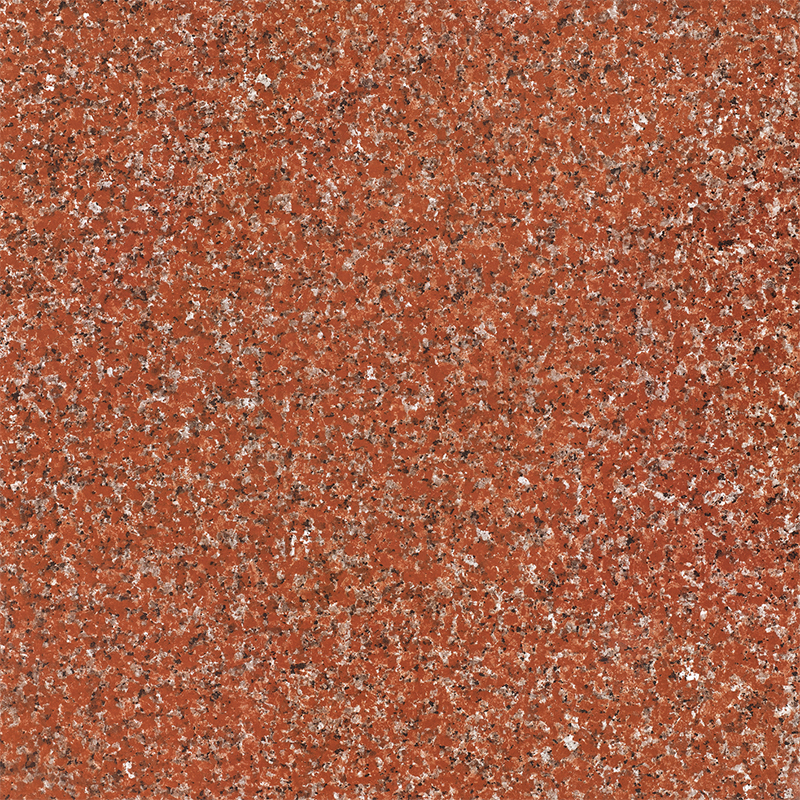


How can the density of solid color brick be improved by optimizing the firing curve to reduce water absorption and stain penetration?
Release Time : 2026-01-30
Improving the density of solid color bricks is key to reducing water absorption and stain penetration. Optimizing the firing profile requires systematic control of three main factors: temperature, time, and atmosphere. In traditional firing processes, uneven temperature gradients, insufficient holding time, or uncontrolled redox atmospheres can easily lead to incomplete closure of pores within the body, forming microscopic channels that provide pathways for moisture and stain penetration. By precisely controlling the heating rate, peak temperature, holding time, and cooling method of the firing profile, the densification process of the body can be significantly improved, ultimately resulting in reduced water absorption and enhanced stain resistance.
The heating stage is crucial for moisture removal and structural remodeling of the body. If the temperature rises too quickly, surface moisture evaporates rapidly, and internal water vapor cannot escape in time, easily creating vapor pressure between the glaze and the body, leading to glaze cracking or body delamination. If the temperature rises too slowly, prolonged low temperatures may reduce the body's strength, increasing the risk of subsequent deformation. The optimization strategy involves a segmented heating approach: a slow heating phase at low temperatures to remove adsorbed water, a moderately accelerated heating phase at medium temperatures to promote the oxidation and decomposition of organic matter, and precise control of the vitrification reaction process at high temperatures. For example, during the oxidation stage, adjusting the excess air coefficient ensures complete combustion of organic matter, preventing carbon residue from forming closed pores and laying the foundation for subsequent densification.
The matching of peak temperature and holding time is a crucial factor in determining density. At high temperatures, the green body undergoes liquid-phase sintering, and particles rearrange themselves through liquid-phase migration, gradually filling the pores. If the peak temperature is insufficient, the amount of liquid phase generated is limited, and particles cannot fully contact each other, resulting in incomplete densification; if the holding time is too short, the liquid phase does not diffuse completely, and pore closure is incomplete; conversely, if the temperature is too high or the time is too long, abnormal grain growth may occur, forming coarse grain boundaries and reducing material strength. In practice, the optimal temperature-time combination needs to be determined through experimentation. For example, in the firing of alumina ceramics, short-time high-temperature rapid sintering technology, through the synergistic effect of dynamic pressurization and pulsed current, reduces the holding time to one-tenth of that of traditional processes, while controlling the grain size to the micrometer level, achieving a dual improvement in density and strength.
Controlling the cooling stage directly affects the stress distribution within the green body. Rapid cooling at high temperatures can fix the microstructure and prevent grain growth, but excessively rapid cooling can easily lead to thermal stress concentration within the green body, causing cracks. Slow cooling, while releasing stress, may result in incomplete phase transformation due to excessively long cooling times. Optimization strategies include segmented cooling: rapid cooling in the high-temperature stage to inhibit grain growth, slow cooling in the medium- and low-temperature stages to avoid cracking, and natural cooling in the low-temperature stage to stabilize the structure. For example, in ceramic additive manufacturing, inert gas synchronous cooling technology controls the cooling rate within a specific range, reducing thermal stress cracks while ensuring that the micro-area density meets standards.
The control of the firing atmosphere is crucial to the surface quality and intrinsic properties of solid color bricks. In an oxidizing atmosphere, impurities such as iron and titanium in the green body are fully oxidized, preventing black spots or color differences after firing. A reducing atmosphere, on the other hand, promotes the formation of specific crystalline phases, enhancing material strength. For example, in preparing high-whiteness solid color bricks, the oxygen content in the oxidation stage must be strictly controlled to ensure complete carbon combustion and prevent blackening of the green body due to carbon residue. In preparing functional solid color bricks, a reducing atmosphere can induce the precipitation of specific crystalline phases, enhancing the material's wear resistance or stain resistance.
Green body density and raw material uniformity are prerequisites for optimizing the firing profile. If the green body density is uneven, deformation or cracking is likely to occur during firing due to differences in shrinkage rates. If the raw material particle size distribution is too wide, local porosity may form due to inconsistent sintering rates. In practice, high-pressure molding technology is needed to increase the initial density of the green body, and multi-stage sieving and homogenization processes are required to ensure raw material uniformity, providing a fundamental guarantee for optimizing the firing profile.
The application of intelligent control technology provides precise means for optimizing the firing profile. By arranging thermocouples at multiple points within the kiln to monitor the temperature field distribution in real time, and combining this with a PLC automatic adjustment system, temperature deviations can be dynamically corrected, ensuring that the firing curve strictly adheres to preset parameters. For example, after introducing a production management system, a company achieved real-time monitoring and anomaly warnings of the firing curve through a digital platform, significantly improving the firing pass rate while reducing energy consumption.
Optimizing the firing curve requires coordinated efforts across multiple dimensions, including heating rate, peak temperature, holding time, cooling method, atmosphere control, green body density, and intelligent control. Through systematic regulation, the density of solid color brick can be significantly improved, and water absorption reduced to extremely low levels, preventing stains from penetrating and achieving a stain-resistant effect that is easily cleaned with water, meeting the stringent performance requirements of high-end applications.